Evaluating the Green Celtic Knot for Digital Printing and Design
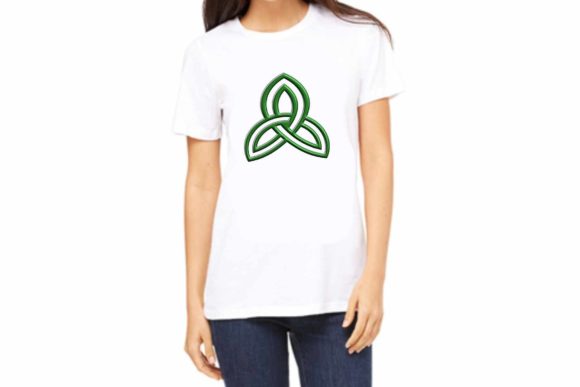
The Green Celtic Knot is a distinct digital design asset that merges traditional interlaced artistry with modern production specifications. Specifically formatted as an 11x11 inch image at 300 DPI, this graphic is available in both PNG and SVG formats to accommodate a wide range of manufacturing workflows. For designers, crafters, and print shop operators, understanding the technical capabilities and aesthetic applications of this specific file configuration is essential for determining its suitability for projects involving sublimation, Direct-to-Film (DTF) transfers, and general commercial printing.
Technical Specifications and Format Utility
When evaluating digital assets for physical production, resolution and format dictate the final output quality. The Green Celtic Knot is engineered with production standards in mind. The base size of 11x11 inches at 300 DPI provides a high-resolution raster foundation suitable for most apparel and decor applications. This resolution ensures that when printed at full size or slightly reduced, the edges remain crisp and the color saturation remains consistent without pixelation.
The inclusion of both PNG and SVG formats addresses two different segments of the printing market. The PNG format serves as a reliable, pre-rasterized option for users who require immediate compatibility with RIP software used in DTF and sublimation printing. Because it is already sized and resolved, it minimizes the risk of user error during the scaling process. Conversely, the SVG (Scalable Vector Graphics) format offers infinite scalability without quality loss. This vector version is critical for users who need to resize the Green Celtic Knot significantly beyond the 11x11 inch baseline for large-format posters or banners, or conversely, shrink it down for small decals and labels while maintaining perfect line integrity.
Applications in Modern Print Technologies
The versatility of this design lies in its compatibility with current transfer technologies. Sublimation printing, which relies on heat and pressure to bond dye to polyester substrates, benefits from the high DPI of the source file. The intricate lines characteristic of Celtic knotwork can sometimes suffer from bleeding or blurring if the source resolution is insufficient; however, the 300 DPI specification helps maintain definition on shirts and hoodies.
For DTF transfers, which are increasingly popular for their ability to adhere to cotton and dark fabrics, the Green Celtic Knot’s digital construction allows for precise white underbase generation. The clear distinction between the green knot elements and the transparent background facilitates accurate masking, ensuring that the transfer film only prints where necessary. This efficiency reduces material waste and improves the hand-feel of the final garment. Additionally, the design is well-suited for vinyl cutting and decal creation, provided the user utilizes the SVG file to guide the plotter blade along smooth, continuous paths rather than tracing a raster image.
Aesthetic and Cultural Considerations
Beyond technical metrics, the selection of a Green Celtic Knot often involves cultural and aesthetic alignment. This motif carries historical weight associated with continuity, eternity, and interconnectedness. When selecting this design for merchandise or personal projects, creators should consider whether the visual style aligns with the intended message. The specific shade of green used in the digital file also plays a role in color management. Users must verify that the RGB or CMYK color profile embedded in the file matches their printer’s capabilities to avoid unexpected color shifts, particularly since "Celtic green" can vary from deep emerald to bright kelly green depending on the display and ink set.
Benefits and Practical Advantages
Choosing a pre-formatted asset like this offers several tangible benefits for production workflows:
- Production Readiness: The 11x11 inch dimension covers standard print areas for adult t-shirts, tote bags, and throw pillows without requiring manual resizing or upscaling, streamlining the setup process.
- Cross-Platform Compatibility: Having both vector and raster versions eliminates the need to purchase separate files for different machines. A user can employ the PNG for a quick shirt press and the SVG for a large window decal using the same core design.
- Intricate Detail Retention: Celtic knots are defined by their complex weaving patterns. High-resolution sourcing prevents the "muddy" appearance that often plagues low-quality internet images when applied to physical media.
- Transparent Background Integration: Both formats typically support transparency, allowing the knot to be layered over various fabric colors or integrated into composite designs without tedious background removal.
Tradeoffs and Limitations
Despite its utility, the Green Celtic Knot in this specific configuration presents certain limitations that evaluators must weigh against their project requirements. The fixed 11x11 inch aspect ratio assumes a square layout. If a project requires a rectangular or border-oriented application, such as a sleeve print or a horizontal banner, the user will need to modify the composition or use the SVG to stretch elements, which may distort the geometric balance inherent in traditional knotwork.
Furthermore, while 300 DPI is the industry standard for viewing distances typical of apparel, it may be insufficient for fine art giclée prints viewed at very close range or for massive outdoor signage if the user relies solely on the PNG. While the SVG mitigates this, not all RIP software handles complex vector nodes perfectly, potentially requiring the user to flatten or simplify the file before printing. There is also the consideration of design exclusivity; as a standardized digital asset, this specific Green Celtic Knot may appear on other products in the marketplace, which could be a drawback for brands seeking unique intellectual property.
Situational Fit: When to Choose This Asset
This specific digital asset represents a strong fit for small-to-medium business owners, hobbyists, and event planners who prioritize speed and reliability over bespoke illustration. It is ideal for St. Patrick’s Day merchandise, heritage festivals, wedding stationery with Irish themes, or uniform branding for organizations with Celtic ties. The dual-format availability makes it particularly valuable for shops that operate multiple types of equipment, such as a combination of a sublimation printer and a vinyl cutter.
Conversely, alternatives may be worth considering for high-end luxury brands or clients requiring trademarkable logos. In these instances, commissioning a custom-drawn vector ensures exclusive rights and allows for tailored adjustments to line weight and color gradients that a stock asset cannot provide. Additionally, if the end-use involves industrial outdoor signage exposed to UV radiation, the colorfastness of the print depends entirely on the ink and substrate, not just the digital file; users should ensure their physical materials match the durability expectations of the digital design's clean aesthetic.
Decision-Making Insights for Buyers
Ultimately, the decision to utilize this Green Celtic Knot resource should be based on a comparison of technical specs against project constraints. Evaluators should ask three key questions before integration. First, does the 11x11 inch maximum raster size cover the intended print area? Second, does the specific green hue complement the existing brand palette or fabric inventory? Third, is the convenience of a ready-to-print file more valuable than the uniqueness of a custom commission?
By focusing on these practical factors rather than aesthetic appeal alone, users can effectively determine if this asset bridges the gap between creative vision and manufacturing reality. The combination of 300 DPI resolution and dual-format flexibility positions this Green Celtic Knot as a functional tool for professional-grade output, provided its parameters align with the specific demands of the intended application.