Elevating Visual Identity: Integrating the Saint Vincent and the Grenadines Flag in Modern Digital and Print Design
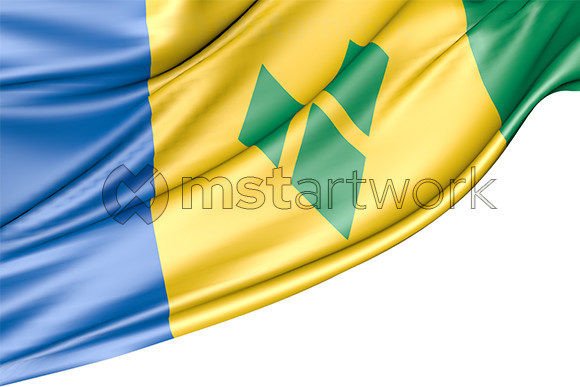
In the rapidly evolving landscape of digital content creation and print-on-demand commerce, visual assets serve as the foundational building blocks of effective communication. For professionals, marketers, and entrepreneurs targeting Caribbean markets or celebrating national heritage, the quality and versatility of these assets are paramount. The Saint Vincent and the Grenadines Flag represents more than just a national symbol; it is a critical design element that requires high-fidelity representation to meet contemporary standards. When utilizing a specialized asset like the Saint Vincent and The Grenadines Flag Isolated on White Background, 3d Illustration, creators are not merely selecting an image but adopting a workflow solution that bridges the gap between traditional symbolism and modern aesthetic expectations.
This specific 3D illustration, rendered at a robust resolution of 3840×2160px in .jpg format, addresses a distinct pain point in the creative industry: the need for culturally accurate, visually engaging, and technically versatile graphics. As audiences become increasingly sophisticated, flat, low-resolution clip art no longer suffices for professional presentations, e-commerce listings, or branded merchandise. The shift toward three-dimensional rendering in national iconography reflects a broader trend in graphic design where depth, lighting, and texture are used to convey respect, modernity, and premium quality.
The Symbolism and Significance of the Saint Vincent and the Grenadines Flag
To effectively utilize this asset, one must first understand the profound significance embedded within the Saint Vincent and the Grenadines Flag. Adopted in 1985, the flag features a vertical tricolor of blue, gold, and green, with three green diamonds arranged in a "V" pattern at the center. Each color carries specific weight: the blue represents the Caribbean Sea and the sky, the gold symbolizes the warmth of the sun and the spirit of the people, and the green stands for the lush vegetation and vitality of the land. The three diamonds represent the Grenadines islands and form the letter "V" for Vincent.
For designers and marketers, understanding this semiotics is crucial. When placing the Saint Vincent and The Grenadines Flag Isolated on White Background, 3d Illustration onto a product or into a presentation, the goal is to honor these meanings through visual clarity. A 3D render enhances this by adding tangible presence to the symbolism. The interplay of light and shadow in a three-dimensional model gives weight to the gold and vibrancy to the green, transforming a static symbol into a dynamic visual anchor. This attention to detail signals to the audience—whether they are locals, diaspora members, or international investors—that the creator values authenticity and quality.
Meeting the Demands of the Print-on-Demand Economy
The rise of the creator economy has democratized access to retail, allowing freelancers and small business owners to launch product lines without significant upfront inventory costs. However, this low barrier to entry has saturated markets, making design quality the primary differentiator. High-resolution assets are non-negotiable in this space. The 3840×2160px resolution of this 3D illustration provides the necessary pixel density for a wide array of physical products.
Consider the practical applications for print-on-demand ventures:
- Apparel and Textiles: Printing on t-shirts, baby clothes, and kids' clothes requires crisp edges and vibrant color retention. The isolation on a white background allows for seamless integration into garment mockups and direct-to-garment (DTG) printing workflows without tedious masking or background removal.
- Hard Goods and Merchandise: Mugs, stickers, and phone cases benefit from the 3D aesthetic, which mimics the physical nature of the product itself. A flat flag can look like a sticker on a mug; a 3D rendered flag looks like part of the product's industrial design.
- Paper Products and Stationery: Greeting cards, posters, and scrapbooking materials rely on visual hierarchy. The depth of the 3D illustration creates a focal point that draws the eye, making it ideal for celebratory items related to Independence Day, national holidays, or cultural heritage events.
By leveraging a pre-rendered 3D asset, entrepreneurs save hours of modeling time while ensuring their products stand out in crowded marketplaces like Etsy, Redbubble, or independent Shopify stores.
Enhancing Professional Presentations and Digital Media
Beyond physical merchandise, the Saint Vincent and the Grenadines Flag plays a pivotal role in corporate and institutional communication. Government agencies, tourism boards, educational institutions, and multinational corporations operating in the region frequently require high-quality national imagery for reports, pitch decks, and web interfaces. In these contexts, pixelation or poor composition can inadvertently signal unprofessionalism.
The 3840×2160px dimensions align perfectly with 4K display standards and modern widescreen presentation formats. When integrated into the background of a slide deck or as a hero image on a website, the isolated white background offers maximum flexibility. Designers can easily composite the flag over gradients, photographs, or solid brand colors using standard blending modes in software like Adobe Photoshop or Canva. This adaptability streamlines workflows for marketing teams who need to produce localized content rapidly without commissioning custom 3D renders for every campaign.
Aligning with Broader Creative and Technological Trends
The preference for 3D illustrations over vector or raster flat graphics is part of a larger movement in digital design often referred to as "spatial computing aesthetics." As user interfaces evolve toward spatial design principles seen in modern operating systems and VR/AR environments, 2D assets can sometimes feel anachronistic. Incorporating a 3D rendition of the Saint Vincent and the Grenadines Flag future-proofs visual content, ensuring it feels native to both current screens and emerging immersive platforms.
Furthermore, there is a growing consumer expectation for "digital tactility." In an era dominated by touchscreens, users respond positively to visuals that imply texture and materiality. The 3D illustration captures the weave of fabric and the fold of the banner, triggering a sensory response that flat graphics cannot achieve. This is particularly relevant for lifestyle brands and tourism marketing, where the goal is to evoke the feeling of being present in Saint Vincent and the Grenadines. The asset transforms a political symbol into a textural experience, connecting the viewer emotionally to the destination or culture.
Workflow Efficiency for Freelancers and Agencies
Time is the most valuable currency for freelancers and creative agencies. Creating a photorealistic 3D flag from scratch involves cloth simulation, lighting setup, texturing, and rendering—a process that can take days to perfect. Accessing a ready-made, high-resolution .jpg file eliminates this bottleneck. It allows creatives to focus on layout, typography, and strategy rather than asset generation.
This efficiency extends to revision cycles. Because the asset is isolated on white, it can be swapped, resized, or recolored (within reason) instantly. If a client requests a change from a waving flag to a static emblem, or needs the flag positioned differently on a heat transfer paper design, the clean isolation ensures that adjustments are non-destructive and rapid. This agility is essential in fast-paced marketing environments where trends shift quickly and turnaround times are tight.
Practical Considerations for Implementation
While the Saint Vincent and The Grenadines Flag Isolated on White Background, 3d Illustration is a powerful tool, its effectiveness depends on proper implementation. Professionals should adhere to best practices to maximize the asset's potential:
- Color Management: National flags have specific color codes. While the 3D render provides artistic interpretation, ensure that any adjacent flat design elements match official Pantone or CMYK specifications for print accuracy.
- Contextual Respect: Always use the flag in a manner consistent with national protocols. Avoid distorting the aspect ratio or placing text directly over the central diamonds in a way that obscures the national symbol.
- Resolution Scaling: At 3840×2160px, the asset is suitable for large-format printing up to a certain size. For billboards or massive banners, verify DPI requirements. For web use, compress the .jpg appropriately to maintain site speed without sacrificing visual fidelity on retina displays.
- Licensing and Usage: Ensure you have the appropriate rights for commercial use, especially for print-on-demand products intended for resale. Understanding the legal framework protects your business and respects intellectual property norms.
The Future of Cultural Assets in Design
As we look forward, the intersection of cultural heritage and digital technology will continue to deepen. Assets like this 3D illustration represent a maturation of the stock resource market, moving away from generic clichés toward specific, high-quality, and culturally resonant materials. For the entrepreneur selling heritage-inspired apparel, the marketer promoting Caribbean investment opportunities, or the educator teaching regional history, these tools enable a level of professionalism previously reserved for large-budget productions.
Ultimately, the value of the Saint Vincent and the Grenadines Flag 3D asset lies in its ability to facilitate connection. Whether printed on a child’s onesie, displayed on a corporate website, or featured in a digital greeting card, it serves as a bridge between tradition and innovation. By choosing high-resolution, thoughtfully rendered assets, creators do more than fill space; they validate identity, enhance user experience, and participate in the ongoing visual narrative of Saint Vincent and the Grenadines. In a competitive digital ecosystem, such intentionality is what separates fleeting content from enduring design.