My First Boo: A Technical Guide to Multi-Format Digital Assets for Crafting and Design
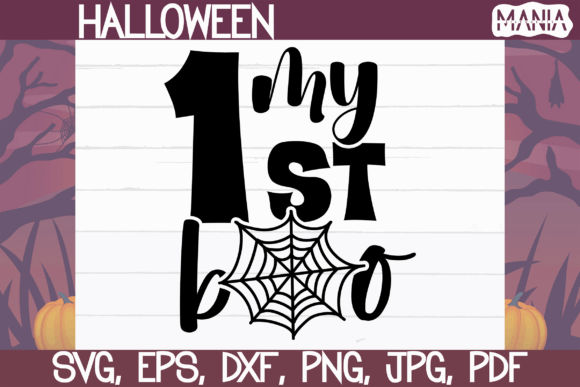
The transition from a simple creative concept to a tangible, professional-grade product often hinges on the quality and versatility of the source material. In the realm of digital crafting and commercial design, My First Boo represents more than just a thematic graphic; it serves as a case study in modern asset management. For creators ranging from hobbyists using home cutting machines to professional designers utilizing industry-standard vector software, the utility of a design is defined by its file ecosystem. Understanding the specific roles of SVG, PNG, EPS, JPEG, DXF, and PDF formats is essential for maximizing the potential of this premium pack and ensuring flawless execution across various media.
The Strategic Value of Format Diversity
A common pitfall in digital design is relying on a single file type for multiple applications. While a raster image may suffice for web viewing, it fails catastrophically when scaled for large-format printing or vinyl cutting. This pack addresses that limitation by providing a comprehensive suite of formats. The inclusion of six distinct file types ensures that My First Boo remains adaptable regardless of the end-user’s technical environment or hardware constraints.
This multi-format approach eliminates the need for third-party conversion tools, which often introduce artifacts, distort nodes, or strip layer data. By providing native files for specific use cases, the asset pack maintains integrity from the initial download to the final production stage. Whether the objective is a delicate iron-on transfer for a baby shirt or a high-contrast engraving for industrial signage, having the correct source file is the primary determinant of quality.
Vector Scalability and Precision Engineering
The core advantage of this collection lies in its vector-based architecture. Unlike raster graphics composed of fixed pixels, vector files utilize mathematical equations to define lines, curves, and shapes. This characteristic grants My First Boo infinite expandability. Users can resize the design to fit a 4-inch onesie or scale it up to cover a billboard without experiencing pixelation, blurring, or loss of detail. This scalability is critical for professionals who must adapt a single brand asset across vastly different physical dimensions.
Beyond mere size, the engineering of these vectors focuses on node optimization. Poorly digitized vectors often contain excessive anchor points, overlapping paths, or open nodes that cause cutting machines to stutter or fail. The files in this pack are meticulously crafted with well-defined, continuously tested layers. This clean topology ensures smooth blade movement during vinyl cutting and precise laser paths during engraving. For users of Cricut Explore or Silhouette Studio, this translates to reduced material waste and faster production times, as the machine interprets clean cut lines rather than correcting jagged digital errors.
SVG and DXF: The Cutting Machine Standards
For the crafting community, the SVG (Scalable Vector Graphics) and DXF (Drawing Exchange Format) files are the workhorses of this pack. The SVG file is perfectly designed for Cricut Design Space and Silhouette Studio, retaining layer separation and color coding. This allows users to manipulate individual elements of the My First Boo design independently, changing colors or hiding layers without needing external editing software.
The DXF file serves as a universal bridge for older machines or alternative software like Sure Cuts A Lot and Make The Cut. While SVG is web-standard, DXF is CAD-standard, making it exceptionally robust for geometric precision. Having both formats ensures that no user is locked out due to software versioning or proprietary ecosystem restrictions. This compatibility removes the "cartridge limitation" of previous eras, giving creators complete control over their design library.
Raster Applications and Print Media Optimization
While vectors dominate the cutting space, raster formats remain indispensable for print media, sublimation, and digital mockups. The pack includes specialized raster files that serve distinct purposes from their vector counterparts.
- PNG with Transparent Background: This file is essential for Print-and-Cut workflows, sublimation transfers, and digital design compositing. The transparency allows My First Boo to be layered over textured backgrounds, colored fabrics, or other graphics without unsightly white boxes. It preserves the anti-aliased edges necessary for smooth printing on inkjet and laser printers.
- JPEG for Iron-On Machines: Specialized heat transfer devices and direct-to-garment printers often require flattened, RGB-color-space images. The included JPEG is optimized specifically for these thermal applications, ensuring color accuracy and proper saturation when heat is applied to fabric. This format removes the guesswork regarding color profiles for entry-level heat press users.
Understanding when to deploy the PNG versus the JPEG is a mark of professional workflow efficiency. The PNG supports alpha channels for complex layering, while the JPEG offers broad compatibility for dedicated hardware that does not support transparency. Providing both ensures that the visual fidelity of My First Boo is maintained whether it is being printed on paper or pressed onto polyester.
Professional Editing and Archival Integrity
For graphic designers, illustrators, and agencies, the ability to modify source art is non-negotiable. The EPS (Encapsulated PostScript) file included in this pack serves as the master editing document. Compatible with Adobe Illustrator, CorelDRAW, and Affinity Designer, the EPS format retains full vector editability, including bezier handles, stroke weights, and gradient meshes.
This level of access allows professionals to integrate My First Boo into larger branding projects, modify typography, or adjust color palettes to match specific Pantone standards. Furthermore, the EPS format acts as an archival master. Because it is software-agnostic and widely supported across decades of design platforms, it ensures the asset remains usable even as specific proprietary file formats evolve or become obsolete.
Additionally, the inclusion of a PDF file containing all clip arts in one place serves a dual purpose. For educators and researchers, it provides a printable reference sheet for lesson planning or cataloging. For business owners, it functions as a quick-view proofing document that can be shared with clients or team members without requiring them to install specialized design software. This accessibility streamlines communication and approval processes in collaborative environments.
Cross-Platform Compatibility and Software Integration
The true uniqueness of this asset pack is its verified compatibility across a massive spectrum of software and hardware. In an industry fragmented by proprietary ecosystems, My First Boo bridges the gap between consumer crafting and professional design.
On the hardware side, testing extends beyond the market leaders. While fully compatible with Cricut Explore and Silhouette Studio, the files also perform reliably in Make The Cut and Sure Cuts A Lot. This breadth supports users who have invested in legacy equipment or alternative cutting platforms, ensuring that high-quality design is not gated behind the latest hardware releases.
On the software side, the integration goes deeper than standard 2D editors. The vector cleanliness of the EPS and SVG files makes them suitable for import into 3D editing software and motion graphics applications like Adobe After Effects and Adobe Flash (Animate). Designers creating animated content, 3D product renders, or interactive media can utilize My First Boo as a base mesh or texture map. This cross-disciplinary utility transforms a simple seasonal graphic into a versatile component for multimedia projects, demonstrating the expansive nature of properly formatted digital assets.
Quality Assurance and Layer Management
Digital assets are only as good as their organization. A significant differentiator for this pack is the meticulous attention paid to layer structure. Many downloadable designs arrive as flattened images or chaotic vector nests where every element is welded together. In contrast, My First Boo features organized, named layers that correspond to logical design elements.
This structural integrity offers several practical advantages:
- Efficient Color Separation: For screen printing or multi-color vinyl projects, separated layers allow for rapid color assignment without manual tracing or ungrouping.
- Selective Editing: Users can isolate specific parts of the design to create variations (e.g., using just the ghost element without the text) without destructive editing.
- Error Reduction: Continuously tested layers mean that common issues like stray nodes, double-cut lines, or hidden artifacts have been resolved prior to distribution. This quality assurance reduces troubleshooting time and material waste.
For educators teaching digital design or business owners managing production teams, this level of organization serves as an educational benchmark. It demonstrates best practices in file preparation and reinforces the importance of clean, semantic layer structures in professional deliverables.
Practical Considerations for Implementation
When integrating My First Boo into a workflow, users should consider the specific output requirements before selecting a file. For physical products involving cutting or engraving, always prioritize the vector formats (SVG, DXF, EPS) to ensure crisp edges. Reserve the PNG and JPEG formats strictly for print, sublimation, or digital display contexts where pixel density matches the output resolution.
Furthermore, while the files are infinitely scalable, users should still respect the aspect ratio and intended proportions of the original design. Extreme distortion can alter the aesthetic intent, even if the vector lines remain mathematically valid. The flexibility of the files grants complete control, but responsible design stewardship ensures the final product honors the craftsmanship of the original creation.
Ultimately, the value of this pack extends beyond the immediate visual appeal of the artwork. It lies in the technical robustness that supports diverse applications. From the nursery to the design studio, and from the home craft room to the industrial workshop, the comprehensive file structure of My First Boo empowers users to execute their vision with precision, efficiency, and professional confidence. By understanding and leveraging the unique properties of each included format, creators can unlock the full potential of their digital toolkit.