Evaluating the Home is Where You Park It Svg for RV and Van Life Projects
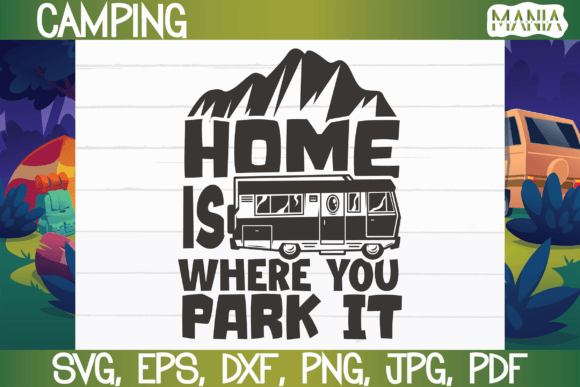
The phrase "Home is Where You Park It" has become a definitive mantra for the recreational vehicle community, van lifers, and camping enthusiasts. When translating this sentiment into physical merchandise or personalized gear, the quality of the digital source file dictates the success of the final product. The Home is Where You Park It Svg package represents a comprehensive digital asset bundle designed specifically for makers who require versatility across different mediums. Unlike single-format downloads that limit application to vinyl cutting only, this collection addresses the full spectrum of DIY fabrication by including six distinct file types: SVG, PNG, EPS, JPEG, DXF, and PDF.
For adults researching customization options for apparel, vehicle decals, or campsite signage, understanding the technical distinctions between these formats is essential. This analysis explores the practical utility of this specific pack, compares it to standard single-format alternatives, and outlines decision factors to help determine if this multi-format approach aligns with your current equipment and project goals.
Technical Versatility Across Fabrication Methods
The primary advantage of this digital pack lies in its format diversity. Makers often encounter friction when a design looks perfect on screen but fails during production due to incompatible file structures. This bundle mitigates that risk through specific file allocations:
- SVG Files: Optimized for Cricut Design Space and Silhouette Studio (Designer Edition). These vector files contain defined cut lines and layers, making them the industry standard for adhesive vinyl, heat transfer vinyl (HTV), and cardstock projects.
- PNG Files: Provided with a transparent background at high resolution. This format is critical for sublimation printing, direct-to-garment (DTG) services, and digital mockups where cut lines are unnecessary.
- EPS Files: The preferred vector format for professional editing in Adobe Illustrator or CorelDRAW. If you need to modify the typography, adjust node points, or integrate the design into a larger commercial layout, EPS offers the most robust editing environment.
- JPEG Files: Specifically noted for Iron-On Machines and legacy systems. While raster-based, having a dedicated JPEG ensures compatibility with older heat press interfaces or basic inkjet transfer papers that do not support vector data.
- DXF Files: Essential for users of the free version of Silhouette Studio, which does not natively open SVG files without an upgrade. DXF serves as the universal bridge for entry-level cutting software.
- PDF Files: Acts as a visual catalog and print-ready document. This is particularly useful for verifying design integrity before importing into specialized software or for use in laser engraving workflows that accept PDF vectors.
When comparing this bundle to generic marketplace listings, the inclusion of both DXF and EPS alongside the standard SVG/PNG combination significantly broadens the user base. Many budget-friendly alternatives omit the DXF file, effectively locking out users of free cutting software, or lack the EPS file, preventing professional designers from customizing the artwork for client work.
Assessing Quality: Layer Organization and Scalability
Beyond file format, the internal architecture of the vector data determines usability. The Home is Where You Park It Svg is described as having meticulously organized, continuously tested layers. For experienced crafters, layer management is often more important than the visual design itself. Poorly digitized files frequently suffer from overlapping nodes, unclosed paths, or merged layers that make color separation impossible.
In practical application, well-defined layers allow for:
- Efficient Weeding: Separate layers for each color mean the cutting machine performs clean cuts without internal errors, reducing waste material and time spent weeding excess vinyl.
- Color Customization: Organized layers enable users to easily toggle visibility or change fill colors within their cutting software without needing external graphic design tools.
- Multi-Media Adaptation: A design intended for a baby shirt requires different sizing and detail levels than one intended for vehicle lettering. Because these files are true vectors (SVG/EPS/DXF), they possess infinite expandability. You can scale the design from a 2-inch chest logo to a 4-foot RV decal without pixelation or loss of edge definition.
This scalability distinguishes premium packs from low-cost raster-only alternatives. While a high-resolution PNG might suffice for a t-shirt, it will appear jagged and unprofessional when scaled up for outdoor vehicle signage. Users planning projects across multiple size categories should prioritize vector-based bundles over static image files.
Software and Hardware Compatibility Considerations
A significant decision factor for buyers is ensuring compatibility with existing ecosystems. This pack claims broad interoperability, but users must evaluate their specific setup against these claims.
Cutting Machine Ecosystems
For Cricut Explore and Maker users, the SVG file is the native choice, offering the smoothest import experience. For Silhouette Cameo and Portrait users, the choice depends on software licensing. Designer Edition users should utilize the SVG; Basic Edition users must rely on the included DXF. Having both formats in one pack eliminates the need to purchase separate listings based on software tier.
Users of Make The Cut and Sure Cuts A Lot will find the SVG and EPS formats most reliable. These third-party platforms sometimes interpret complex SVG grouping differently than proprietary software, making the EPS fallback a valuable safety net for troubleshooting import errors.
Professional and 3D Editing Suites
The mention of compatibility with Adobe Illustrator, Photoshop, Flash, After Effects, and 3D editing software highlights the pack's utility beyond simple crafting. For content creators documenting van life builds, the ability to animate the logo in After Effects or texture-map it onto a 3D van model in Blender adds significant value. Standard craft-focused listings rarely consider these advanced workflows. If your project scope includes digital content creation or professional branding alongside physical merchandise, this multi-software compatibility becomes a key differentiator.
Tradeoffs and Decision Factors
While comprehensive packs offer clear advantages, they are not universally the superior choice for every scenario. Understanding the tradeoffs helps prevent over-investment in unnecessary features.
When This Pack Is the Right Choice:
- You operate multiple machines (e.g., a Cricut for shirts and a laser cutter for wood signs).
- You are unsure of your long-term software commitment and want future-proof files.
- You plan to produce the same design across vastly different scales (apparel vs. vehicle graphics).
- You require editable source files for commercial customization or professional client work.
- You use free cutting software and need DXF access without upgrading.
When Alternatives May Be Preferable:
- Single-Use Projects: If you only own a Cricut and only intend to make one HTV shirt, a simpler, lower-cost SVG-only listing may be more economical.
- Raster-Specific Workflows: For users exclusively doing sublimation or DTG printing who never cut vinyl, the vector files (SVG/DXF/EPS) add unused bulk. A high-DPI PNG bundle might be more streamlined.
- Proprietary Cartridge Systems: While this pack offers freedom from cartridges, users deeply embedded in legacy proprietary ecosystems with no computer interface may not benefit from downloadable files at all.
Practical Application Examples
To contextualize the value proposition, consider three common user scenarios within the RV and camping niche:
The Weekend Camper: Wants to make matching t-shirts for a family reunion. They use a Cricut Joy and HTV. The SVG file provides immediate utility. The extra formats remain dormant but serve as insurance if they upgrade equipment later.
The Full-Time RVer: Needs to brand their newly converted Sprinter van. They require large-format vinyl lettering and want to create a consistent logo for their YouTube channel. The EPS file allows for precise scaling and modification in Illustrator for the vehicle wrap shop, while the PNG serves as a channel watermark. The infinite expandability ensures the decal remains crisp at highway viewing distances.
The Small Business Owner: Sells customized camp gear at local markets. They use a Silhouette Cameo (Basic Edition) for cutting and a heat press for transfers. The DXF file enables cutting without software upgrades, while the JPEG supports their iron-on machine for quick production runs. The organized layers reduce production time per unit, directly impacting profit margins.
Making an Informed Selection
The Home is Where You Park It Svg bundle positions itself as a versatile, professional-grade resource rather than a disposable craft file. Its strength lies in eliminating technical barriers between concept and execution. By providing six distinct formats with tested layer organization, it accommodates the reality that modern makers rarely work within a single software ecosystem or output medium.
However, value is relative to need. Evaluate your current hardware, software licensing, and project pipeline before purchasing. If your workflow spans multiple disciplines—from vinyl cutting to digital design—or if you anticipate evolving your toolset, the comprehensive nature of this pack justifies the investment. For strictly limited, single-format applications, weigh the benefits of versatility against the simplicity of specialized alternatives. Ultimately, the best digital asset is one that removes friction from your creative process while maintaining quality across every intended application.