United States of American Flag Isolated: Integrating High-Resolution 3D Assets into Creative Workflows
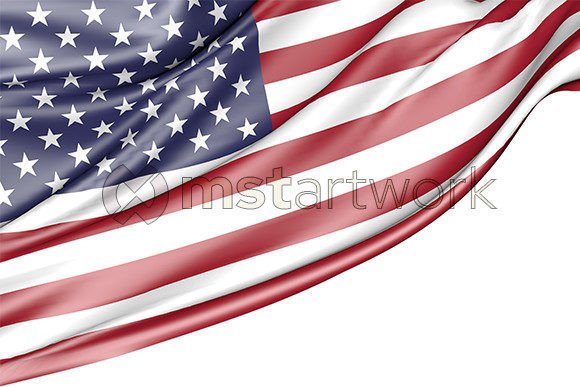
In modern digital design and content creation, the quality of foundational assets dictates the efficiency of the entire production pipeline. The United States of American Flag Isolated serves as a critical component for professionals who require patriotic imagery without the friction of complex editing. Unlike traditional flat vectors or low-resolution photographs, this specific asset is a 3D illustration rendered at 3840×2160px resolution. This distinction matters significantly in professional workflows because it bridges the gap between realistic texture and graphic versatility. When sourcing visual elements for presentations, merchandise, or web design, understanding how to leverage an isolated 3D render can streamline post-production and ensure consistent branding across multiple mediums.
The Strategic Value of Isolation and Resolution
The primary functional advantage of the United States of American Flag Isolated on White Background lies in its immediate usability. In a standard design workflow, removing backgrounds from raster images is often a tedious, time-consuming step that introduces artifacts or jagged edges around complex fabric folds. Because this asset is pre-isolated against a pure white background (#FFFFFF), it allows for near-instantaneous integration. For designers using tools like Adobe Photoshop, Canva, or PowerPoint, the high contrast between the flag and the background enables automated selection tools to create perfect masks in seconds. This reduces preparation time from minutes to moments, allowing creators to focus on layout and composition rather than remediation.
Furthermore, the 3840×2160px resolution (4K UHD) provides necessary headroom for both digital and physical applications. In digital contexts, this resolution ensures crisp rendering on Retina displays and large-format monitors during presentations. For print-on-demand (POD) entrepreneurs, this pixel density translates to approximately 12.8 x 7.2 inches at 300 DPI, which is sufficient for many apparel and accessory products. Understanding these technical specifications prevents the common pitfall of upscaling low-resolution assets, which inevitably leads to pixelation and unprofessional results. By starting with a native high-resolution source, you maintain quality integrity throughout the scaling process.
Integration Across Digital and Print Platforms
Versatility is the hallmark of a useful stock asset. The 3D nature of this flag illustration gives it a tactile presence that flat graphics lack, making it particularly effective for specific use cases where depth and realism enhance the user experience.
Presentation and Web Design Implementation
For educators, marketers, and corporate communicators, integrating the United States of American Flag Isolated into slide decks requires attention to visual hierarchy. Because the asset has 3D lighting and shadows baked into the render, it interacts more naturally with other dimensional elements in your presentation template. When placing this on a white slide background, the isolation blends seamlessly. However, when used on colored or textured slides, utilizing layer blending modes such as "Multiply" or "Screen" (depending on the background darkness) can help integrate the white isolation matte naturally without harsh cutout lines. On websites, this asset serves as an excellent hero image element or sidebar graphic. Its JPG format ensures fast load times compared to transparent PNGs of similar dimensions, provided you implement proper lazy loading and responsive sizing in your CSS.
Print-on-Demand and Merchandise Production
Entrepreneurs utilizing platforms like Printful, Redbubble, or Etsy rely heavily on asset adaptability. The 3D illustration style offers a unique aesthetic for t-shirts, mugs, and stickers that differs from standard vector flags. Before sending this file to production, verify the printable area of your chosen product. While 3840×2160px is robust, it is landscape-oriented. For vertical products like tote bags or certain apparel placements, you may need to crop or pair the flag with complementary typography to fill the canvas effectively. Always convert the RGB color profile of the JPG to CMYK before printing to ensure the reds and blues remain vibrant and accurate, as screen-rendered colors often appear duller in ink. The 3D shading in this illustration can actually aid in hiding minor print inconsistencies on fabric textures, making it a forgiving choice for textile applications.
Workflow Optimization and Asset Management
Treating the United States of American Flag Isolated as a managed resource rather than a disposable image improves long-term productivity. Professionals should establish a standardized ingestion process for this asset.
- Centralized Storage: Store the master 3840×2160px JPG in a cloud-synced asset library (e.g., Dropbox, Google Drive, or a DAM system). Never work directly on the master file; always create duplicates for specific projects to preserve the original quality.
- Derivative Creation: Upon acquisition, immediately generate smaller, optimized versions. Create a transparent PNG version for overlay work, a web-optimized JPG for site use, and a CMYK TIFF for print archives. This front-loaded effort eliminates repetitive conversion tasks later.
- Metadata Tagging: Embed relevant keywords and usage rights information directly into the file’s metadata. This ensures that if the asset becomes separated from its documentation, you can still identify its source and licensing terms.
- Version Control: If you modify the color grading or apply filters for a specific campaign, save these variations with clear naming conventions (e.g., US_Flag_3D_Vintage_Filter.jpg) to distinguish them from the neutral master.
This systematic approach transforms a single image download into a comprehensive design toolkit. It ensures consistency across team members and prevents the "asset hunt" that frequently derails project timelines.
Technical Considerations for Mixed Media Projects
When combining the United States of American Flag Isolated with other design elements, consider the lighting direction inherent in the 3D render. Since this is a pre-rendered illustration, the light source is fixed. Placing this flag next to other 3D objects or text effects with conflicting light sources creates cognitive dissonance for the viewer. Analyze the highlight and shadow areas of the flag before finalizing your layout. If your overall design uses top-left lighting but the flag is lit from the top-right, consider flipping the canvas horizontally or adjusting global lighting effects to unify the scene. This level of detail separates amateur compositions from professional-grade visuals.
For scrapbooking, greeting cards, and paper crafts, the JPG format is universally compatible with home printers and cutting machines like Cricut or Silhouette. However, because the file is isolated on white, users creating physical cutouts must define a cut line. Most cutting software can auto-trace high-contrast images, but manually refining the trace path ensures clean edges on the physical product. The 3D shading provides natural visual cues for where folds or layers might exist, offering opportunities for multi-layered paper projects that mimic the depth of the digital illustration.
Quality Control and Usage Best Practices
Maintaining the integrity of patriotic symbols requires adherence to both aesthetic standards and respectful representation. When manipulating the United States of American Flag Isolated, avoid distortions that violate flag code sensibilities, even in commercial art. Stretching, excessive warping, or applying grunge overlays should be done thoughtfully. From a technical quality standpoint, always inspect the isolation edges at 100% zoom before final export. Even high-quality renders can have slight fringing. A quick pass with a refinement brush or a feathered mask can smooth transitions, ensuring the flag looks like it belongs in your composition rather than floating awkwardly above it.
Efficiency also involves knowing when not to use this specific asset. If your project requires extreme close-ups beyond 300 DPI at full size, or if you need to animate individual cloth physics, a static JPG illustration will be insufficient. Recognizing the boundaries of the asset prevents wasted effort. Conversely, for 90% of social media graphics, web headers, and standard merchandise, this resolution and format hit the optimal balance of quality and performance. By aligning the asset’s capabilities with your project requirements, you ensure a smooth, professional outcome that respects both the design process and the end user’s experience.
Ultimately, the United States of American Flag Isolated is more than a decorative element; it is a functional tool within a broader creative ecosystem. Whether you are building a brand identity, crafting educational materials, or launching a new product line, treating this asset with technical intentionality maximizes its value. Proper preparation, platform-specific optimization, and respectful implementation turn a simple image file into a reliable cornerstone of your visual strategy.