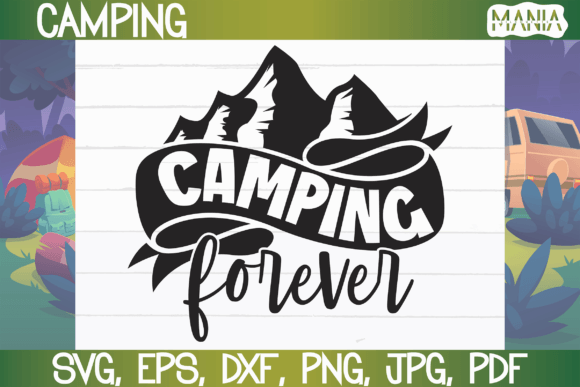
Evaluating the Camping Forever Svg Cut File for Your Next Creative Project
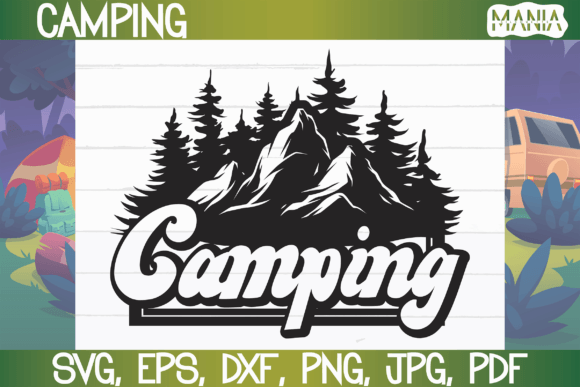
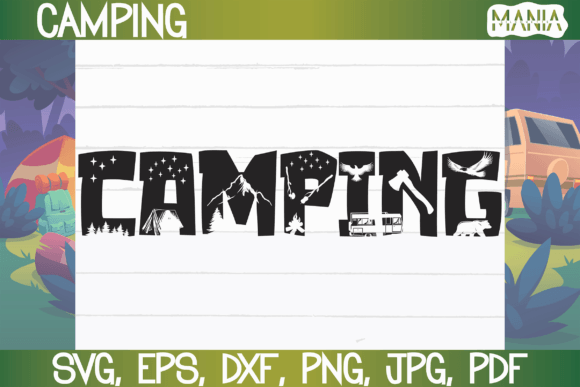
When selecting digital assets for crafting, apparel design, or outdoor-themed merchandise, the technical integrity of the file is often just as important as the aesthetic appeal. The Camping Forever Svg Cut File represents a specific category of premium digital design resources that prioritize structural organization and cross-platform compatibility over simple visual novelty. For crafters and designers comparing options in this niche, understanding what distinguishes this pack from generic alternatives is essential for making an informed purchasing decision. This resource is not merely a collection of images; it is a comprehensive toolkit containing six distinct file formats designed to bridge the gap between creative software and physical fabrication machines.
Technical Composition and Format Versatility
The primary differentiator for any high-quality cut file is the breadth and utility of its included formats. Many entry-level design packs offer only SVG or PNG files, which limits their application to basic cutting machines or web use. In contrast, the Camping Forever Svg Cut File provides a multi-format ecosystem that addresses various stages of the production workflow. Understanding the specific role of each included file type helps users determine if this pack aligns with their current hardware and software stack.
- SVG Files: Optimized specifically for Cricut Design Space and Silhouette Studio, these vector files maintain mathematical precision during resizing. Unlike raster images, they allow for individual node editing and layer separation directly within cutting software.
- PNG Files: Provided with a transparent background, these are essential for sublimation printing, digital mockups, or overlaying designs onto textured backgrounds where vector paths are unnecessary.
- EPS Files: Geared toward professional editing, this format ensures compatibility with Adobe Illustrator and CorelDRAW. It allows designers to modify anchor points, adjust stroke weights, or recolor elements before exporting for production.
- JPEG Files: While less common in cutting workflows, the inclusion of JPEGs caters specifically to Iron-On machines and heat press users who require a flattened, high-resolution reference image for alignment.
- DXF Files: Critical for users of free versions of Silhouette Studio or older CNC machinery, DXF serves as a universal vector exchange format that preserves geometry without proprietary metadata.
- PDF Files: Acting as a master catalog, this document organizes all clip art in one place, serving as a quick visual reference to locate specific assets without opening multiple design files.
This level of format diversity eliminates the need for third-party conversion tools, which often introduce artifacts or disconnect layers. When comparing this pack to single-format alternatives, the value proposition lies in future-proofing; you possess the correct native file regardless of whether you switch from a hobbyist cutter to professional design software later.
Layer Organization and Editability vs. Flat Designs
A frequent pain point in digital crafting is receiving a "cut file" that is actually a flattened image traced into a single silhouette. These files are notoriously difficult to customize because color changes require manual masking rather than simple layer toggling. The Camping Forever Svg Cut File is meticulously crafted with well-defined, continuously tested layers. This distinction is vital for users who intend to personalize the design rather than use it strictly as-is.
Proper layering means that text, graphical elements, and background components exist on separate planes. For example, if you wish to change the color of a tent while keeping the trees green, organized layers make this a two-click process. In comparison, unorganized or auto-traced files would require you to manually redraw or erase sections of the design. This structural integrity also reduces machine errors; clean nodes and closed paths prevent the blade from stuttering or making unnecessary passes, saving both material and time. However, this level of complexity may be excessive for users who simply want a quick, unaltered print-and-cut project and do not own editing software. If your workflow never involves customization, the advanced layering features may represent unused potential.
Scalability and Resolution Independence
The infinite expandability of vector-based assets like the Camping Forever Svg Cut File offers a significant advantage over raster-only alternatives. Because the design is defined by mathematical coordinates rather than pixels, it can be scaled from a baby onesie to a large-format banner or even industrial engraving applications without degradation. This makes the pack suitable for diverse product lines within a single brand.
When evaluating this against standard clip art bundles found on general stock sites, consider the end-use. Raster bundles are often limited to 300 DPI at a fixed size; enlarging them results in pixelation that ruins professional finishes. Vector files remove this ceiling. However, users should note that extreme scaling requires appropriate material considerations. While the file remains perfect at any size, the physical medium dictates feasibility. A design optimized for vinyl weeding might have details too small for wood burning at miniature scales, or lines too thin for screen printing at massive sizes. The file provides the geometric freedom, but the crafter must still apply material science knowledge.
Software Compatibility and Workflow Integration
Compatibility is often the deciding factor when choosing between similar design packs. The Camping Forever Svg Cut File supports a wide spectrum of industry-standard and hobbyist platforms. This includes cutting ecosystems like Cricut Explore, Silhouette Studio, Make The Cut, and Sure Cuts A Lot, as well as professional suites like Adobe Illustrator, Photoshop, Flash, After Effects, and various 3D editing software.
This broad compatibility suggests a neutral, agnostic approach to file creation. Some designers optimize exclusively for Cricut, resulting in files that behave poorly in Silhouette Studio due to differing interpretation of compound paths. Others design in Illustrator but fail to export clean SVGs for cutters. This pack aims to mitigate those friction points through rigorous testing across platforms. For users who operate in a hybrid environment—perhaps designing in Adobe Illustrator but cutting on a Cricut—this interoperability is non-negotiable.
Conversely, if you operate exclusively within a single, closed ecosystem and never plan to migrate or use external editors, a platform-specific asset might suffice. The premium nature of this pack is most justified for users who leverage multiple tools or anticipate upgrading their tech stack. Beginners using only mobile apps or simplified web-based editors may find the full suite of EPS and DXF files redundant, though having them available ensures no barriers exist as skills develop.
Assessing Value: Premium Packs vs. Free Alternatives
In the digital design marketplace, free alternatives abound. Comparing the Camping Forever Svg Cut File to free resources requires analyzing hidden costs. Free files frequently suffer from open nodes, overlapping paths, missing layers, or licensing restrictions that prohibit commercial use. Troubleshooting a flawed free file can consume hours of labor, negating the monetary savings.
This premium pack trades zero-cost access for reliability and legal clarity. The "meticulously crafted" descriptor implies human oversight in path optimization and layer naming conventions. For commercial sellers or serious hobbyists, time efficiency and consistent output quality typically outweigh the nominal cost of a verified asset. However, for a one-time personal project where perfection is not critical, free resources remain a valid alternative. The decision matrix should weigh the frequency of use and the cost of failure: if a ruined shirt or wasted vinyl costs more than the design pack, the premium option is economically superior.
Best-Fit Scenarios and Limitations
No single design resource fits every user. The Camping Forever Svg Cut File excels in specific contexts while presenting tradeoffs in others. Identifying where it fits your needs prevents buyer’s remorse.
Ideal Use Cases:
- Multi-Medium Production: When you need the same camping motif for vinyl decals, sublimation tumblers, and laser-engraved signs.
- Commercial Merchandise: Where file integrity directly correlates to product quality and customer satisfaction.
- Design Customization: When the base design is a starting point for personalized names, dates, or color variations.
- Cross-Platform Workflows: For designers switching between vector editors and cutting machines.
Potential Limitations:
- Learning Curve: Users unfamiliar with layer management or vector editing may initially feel overwhelmed by the number of files and options.
- Style Specificity: As a themed pack, it is inherently limited to camping aesthetics. It cannot serve as a general-purpose library.
- Over-Specification: Casual users needing a single, static sticker may not utilize 80% of the included formats and features.
Ultimately, selecting the right digital asset involves matching technical specifications to practical requirements. The Camping Forever Svg Cut File positions itself as a professional-grade solution for users who demand flexibility, organization, and broad compatibility. By offering a complete suite of vector and raster formats alongside tested layer structures, it addresses the common failures of lower-tier alternatives. Whether this pack is the correct choice depends entirely on your workflow complexity, equipment diversity, and commitment to quality. For those prioritizing long-term usability and cross-software performance, it presents a robust option worth serious consideration against simpler, less versatile competitors.