Elevating Visual Communication with the Japan Flag Isolated on White Background
In the contemporary landscape of digital design and global marketing, visual assets are no longer mere decorations; they are fundamental components of communication strategy. For professionals, creators, and entrepreneurs operating in international markets, the precision and quality of national symbols can define the credibility of a project. Among these essential assets, the Japan Flag Isolated on White Background stands out as a versatile tool that bridges cultural representation with modern design utility. Whether utilized in high-stakes corporate presentations or intimate craft projects, this specific visual asset addresses a growing demand for clean, adaptable, and high-resolution imagery that respects both aesthetic standards and cultural significance.
The Strategic Value of Clean National Imagery
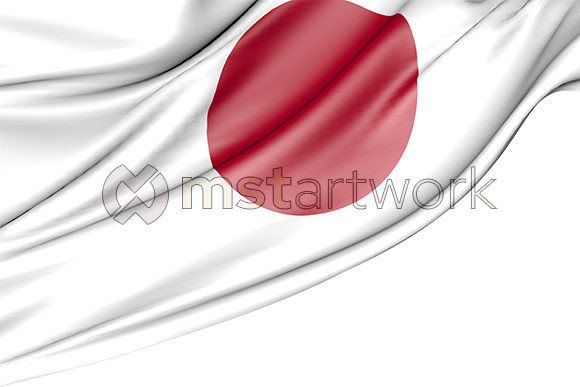
The concept of isolation in graphic design refers to the removal of distracting elements to focus entirely on the subject. When designers and marketers seek a Japan Flag Isolated on White Background, they are prioritizing flexibility. In an era where content must be repurposed across dozens of platforms—from LinkedIn headers to physical merchandise—the ability to seamlessly integrate a symbol without complex masking or editing is invaluable. This asset eliminates the friction often associated with stock photography, where flags are frequently depicted waving in wind, attached to poles, or set against busy landscapes that clash with brand guidelines.
This shift toward isolated imagery reflects a broader industry trend toward modular design systems. Modern workflows require assets that function as interchangeable components. A 3D illustration of the Japanese flag, specifically rendered with depth and lighting effects while maintaining a pure white backdrop, offers a unique hybrid solution. It provides the clarity of a vector graphic with the tactile engagement of photorealism. This duality is particularly relevant for businesses navigating the intersection of traditional print media and immersive digital experiences, ensuring visual consistency regardless of the medium.
Technical Specifications Meeting Professional Demands
For freelancers and agencies, technical specifications are not just details; they are determinants of workflow efficiency. The availability of this asset in .jpg format at 3840×2160px resolution aligns perfectly with current display standards. As 4K monitors become the baseline for professional workstations and consumer electronics, utilizing lower-resolution assets results in pixelation and a perceived lack of professionalism. The 3840×2160px dimension ensures that the flag retains crisp edges and accurate color saturation even when scaled for large-format posters or wall art.
Furthermore, the choice of JPG format balances quality with accessibility. While RAW or TIFF files offer lossless compression, they create unnecessary bloat for web-based projects and social media graphics. High-quality JPGs optimized for this resolution allow for rapid loading times on websites and smooth integration into presentation software like PowerPoint or Keynote. This technical pragmatism supports the fast-paced nature of modern content creation, where speed of execution must never compromise visual fidelity.
Cross-Industry Applications and Market Relevance
The utility of the Japan Flag Isolated on White Background extends far beyond diplomatic or governmental use cases. Its relevance spans multiple sectors, driven by globalization and the rise of niche consumer markets.
Corporate Communications and International Business
For multinational corporations and B2B marketers, accurate representation of partner nations is a matter of respect and brand safety. In financial reports, market analysis decks, and localization strategies, the Japanese flag serves as a critical data visualization element. Using a standardized, high-resolution isolated asset ensures that internal and external communications maintain a cohesive visual identity. The 3D illustration variant adds a layer of modernity to otherwise sterile business documents, signaling innovation while acknowledging tradition.
E-Commerce and Print-on-Demand Innovation
The explosion of the print-on-demand (POD) economy has created a surge in demand for culturally specific graphics. Entrepreneurs designing t-shirts, mugs, stickers, and phone cases require assets that are ready for direct-to-garment (DTG) printing and sublimation. The white background of this asset simplifies the pre-press process, allowing for easy transparency conversion if needed, or serving as a deliberate design choice for minimalist aesthetics. For sellers targeting enthusiasts of Japanese culture, anime, or travel, high-quality flag imagery acts as a foundational element upon which more complex designs can be built.
Education, Craft, and Lifestyle Content
Beyond commerce, there is a significant lifestyle and educational segment that relies on accessible visual resources. Teachers creating lesson plans on Asian geography, scrapbookers documenting heritage trips, and parents designing personalized baby clothes all benefit from this asset. The clean aesthetic fits naturally into the "flat lay" and minimalist trends dominating social media platforms like Pinterest and Instagram. Here, the flag is not just a political symbol but a cultural artifact used to tell personal stories and celebrate heritage in a visually pleasing manner.
Why High-Fidelity Cultural Assets Are Gaining Attention
The increasing attention paid to assets like the Japan Flag Isolated on White Background correlates with a maturation of the digital content ecosystem. Audiences have become sophisticated consumers of visual media; they instantly recognize low-effort design. Blurry, poorly cropped, or stylistically inconsistent national symbols can undermine the authority of a website or product. Conversely, crisp, well-lit, and properly proportioned imagery signals competence.
Additionally, we are witnessing a move away from generic globalization toward specific cultural appreciation. Brands and creators are moving past stereotypical iconography to embrace authentic representations. A standard flat red circle may suffice for a basic icon, but a 3D illustrated flag conveys texture, material, and presence. This nuance matters in a crowded marketplace where differentiation is key. The 3D aspect, in particular, caters to the evolving expectations of users accustomed to rich interfaces in gaming, VR, and modern UI design. It transforms a static symbol into a dynamic visual element that feels native to digital environments.
Integrating Assets into Forward-Looking Workflows
Adopting high-quality isolated assets is also a strategic response to changing workflow expectations. Design teams are increasingly distributed, and asset libraries must be universally usable. A file that requires specialized software to edit or lacks sufficient resolution for multiple outputs creates bottlenecks. By standardizing on versatile assets like this 3840×2160px JPG, organizations streamline collaboration between web designers, print specialists, and social media managers.
Moreover, the white background serves as a neutral canvas that future-proofs the asset. As design trends cycle through maximalism, brutalism, and minimalism, an isolated object remains constant. It can be placed on dark mode interfaces, vibrant gradient backgrounds, or textured paper simulations without losing its integrity. This adaptability reduces the need for constant asset regeneration, supporting sustainable design practices and efficient resource management.
Practical Considerations for Creators and Marketers
When incorporating the Japan Flag Isolated on White Background into your projects, consider the following practical applications to maximize impact:
- Presentation Hierarchy: Use the 3D illustration as a primary focal point on title slides to establish context immediately, while using flatter versions for bullet points to avoid visual competition with text.
- Social Media Branding: Leverage the high resolution to create localized profile pictures or story highlights for Japanese market segments, ensuring the image looks sharp on high-density mobile screens.
- Merchandise Design: Utilize the clean edges for heat transfer paper projects, ensuring the white background is either removed via software or integrated as part of a white-base garment design.
- Web Accessibility: Always pair this visual asset with descriptive alt text. While the image is aesthetically pleasing, its semantic value for screen readers depends entirely on proper HTML tagging.
- Print Calibration: Despite the digital perfection of a 3D render, always request a physical proof when printing on fabric or ceramics, as color profiles for the Japanese red (often specified as a specific shade) can vary significantly between RGB screens and CMYK printers.
Conclusion: Precision as a Professional Standard
The Japan Flag Isolated on White Background represents more than just a national emblem; it exemplifies the standard of quality required in today’s visual economy. From facilitating seamless international business communications to enabling creative expression in the POD and crafting sectors, this asset meets the diverse needs of a global user base. Its combination of high resolution, 3D styling, and clean isolation addresses the practical demands of modern workflows while satisfying the aesthetic expectations of discerning audiences.
As we continue to navigate a digitally integrated world, the importance of precise, respectful, and technically sound visual assets will only grow. Professionals who prioritize such quality in their foundational elements build stronger brands, foster better cross-cultural connections, and produce work that stands the test of both technological advancement and shifting design trends. Whether you are preparing a keynote address, launching a new apparel line, or curating an educational resource, this asset provides the reliability and versatility necessary to execute your vision with confidence.